

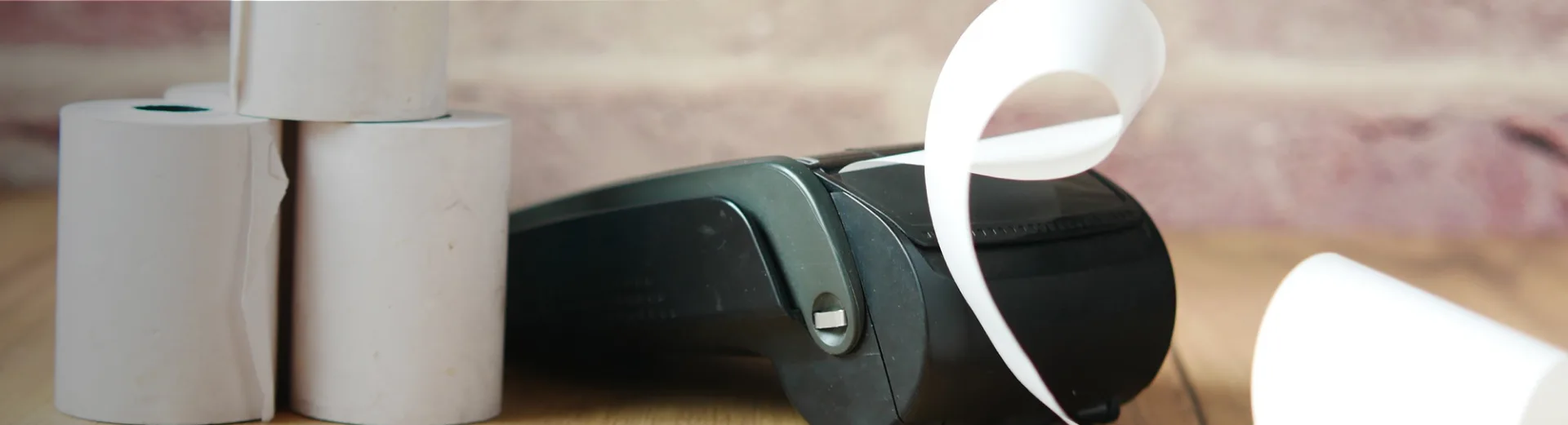
What Are Thermal Paper Rolls?
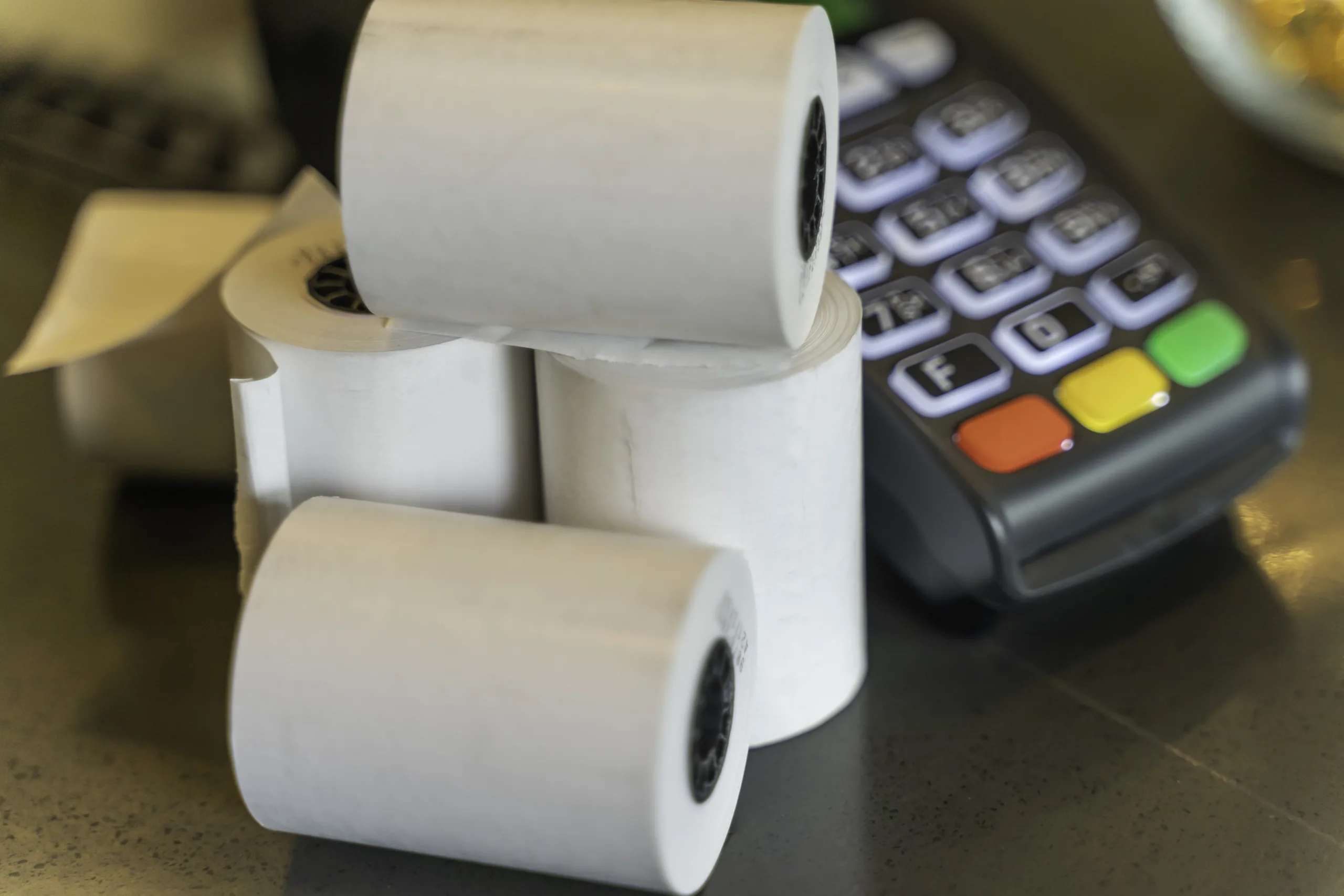
Thermal paper is more than simply standard paper; it has a plethora of advantages. These papers are not the same as those we use in our daily lives, such as note pads and registers. Thermal paper rolls are currently widely utilized in banking and many other industries worldwide. Thermal paper is a form of paper with a chemical coating on the surface that allows the paper to change color when exposed to heat.
How Thermal Paper Works
The surface of thermal paper is coated with a dye and special chemicals. When heat is applied, the dye reacts with the coating, causing the paper to change color and form text or images.
To protect the print quality, thermal paper includes a protective top layer that helps prevent damage caused by UV radiation, water, oil, and heat from the printer head. This ensures the printed content remains clear and readable over time.
Evolution and Usage of Thermal Paper
Before thermal paper became widely used, it was expensive and limited to specific applications. Over time, advancements in production technology made it more affordable and accessible to a wider range of industries.
Today, thermal paper rolls are commonly used in banking systems (such as ATM receipts), retail receipts, and point-of-sale (POS) transactions, becoming a standard part of daily business operations.
Advantages of Thermal Paper Rolls
Thermal paper is widely used because it offers several practical benefits:
- High-quality, sharp printing output
- No need for ink or toner
- Fast and efficient printing process
- Easy compatibility with most POS and printing systems
- Low maintenance requirements
Due to these advantages, thermal paper is commonly used in industries such as retail, hospitality, gas stations, and airline ticketing systems. Many businesses rely on a consistent ATM paper rolls manufacturer to ensure stable supply and quality.
Practical Applications Across Industries
Thermal paper rolls are widely used across multiple industries due to their efficiency and reliability.
They are commonly used for ATM receipts, POS receipts, airline tickets, hotel billing, fuel station transactions, and other high-volume printing environments. Their ability to produce fast and accurate prints makes them ideal for businesses that handle frequent customer transactions.
Environmental Considerations
For environmentally conscious businesses, recycled thermal paper made from post-consumer waste is also available. While it may be slightly less bright than standard thermal paper, it offers a more sustainable alternative with reduced environmental impact.
Companies often work with a reliable paper converting service company to ensure consistent quality while maintaining eco-friendly production standards.
Conclusion
Thermal paper rolls play an essential role in modern business operations due to their speed, efficiency, and reliability. They are widely used across banking, retail, hospitality, and transportation industries for everyday transactions.
With benefits such as high-quality printing, low maintenance, and wide industry compatibility, thermal paper continues to be a practical and cost-effective solution for businesses worldwide.
Frequently Asked Questions (FAQs)
How long does thermal paper last before it fades?
Thermal paper typically lasts between 1 to 5 years depending on storage conditions. Exposure to heat, sunlight, humidity, or chemicals can significantly speed up fading.
Can thermal paper be used in any printer?
No, thermal paper only works with thermal printers. It will not work with inkjet or laser printers because it requires heat-sensitive printing technology.
Why do some thermal receipts turn black when exposed to heat?
This happens because the coating on thermal paper reacts to heat. When exposed to excessive heat (like sunlight or a hot surface), it continues reacting and darkens the entire paper.
Is BPA-free thermal paper better or safer?
Yes, BPA-free thermal paper is considered safer, especially for businesses handling high volumes of receipts, as it reduces potential health and environmental concerns associated with BPA coatings.
What is the difference between high-quality and low-quality thermal paper?
High-quality thermal paper produces clearer prints, lasts longer, and reduces printer wear. Low-quality paper may fade quickly, produce blurry prints, and cause printer jams over time.