


Thermal Paper Roll Sizes in Malaysia: How to Choose the Right Roll for Your Printer
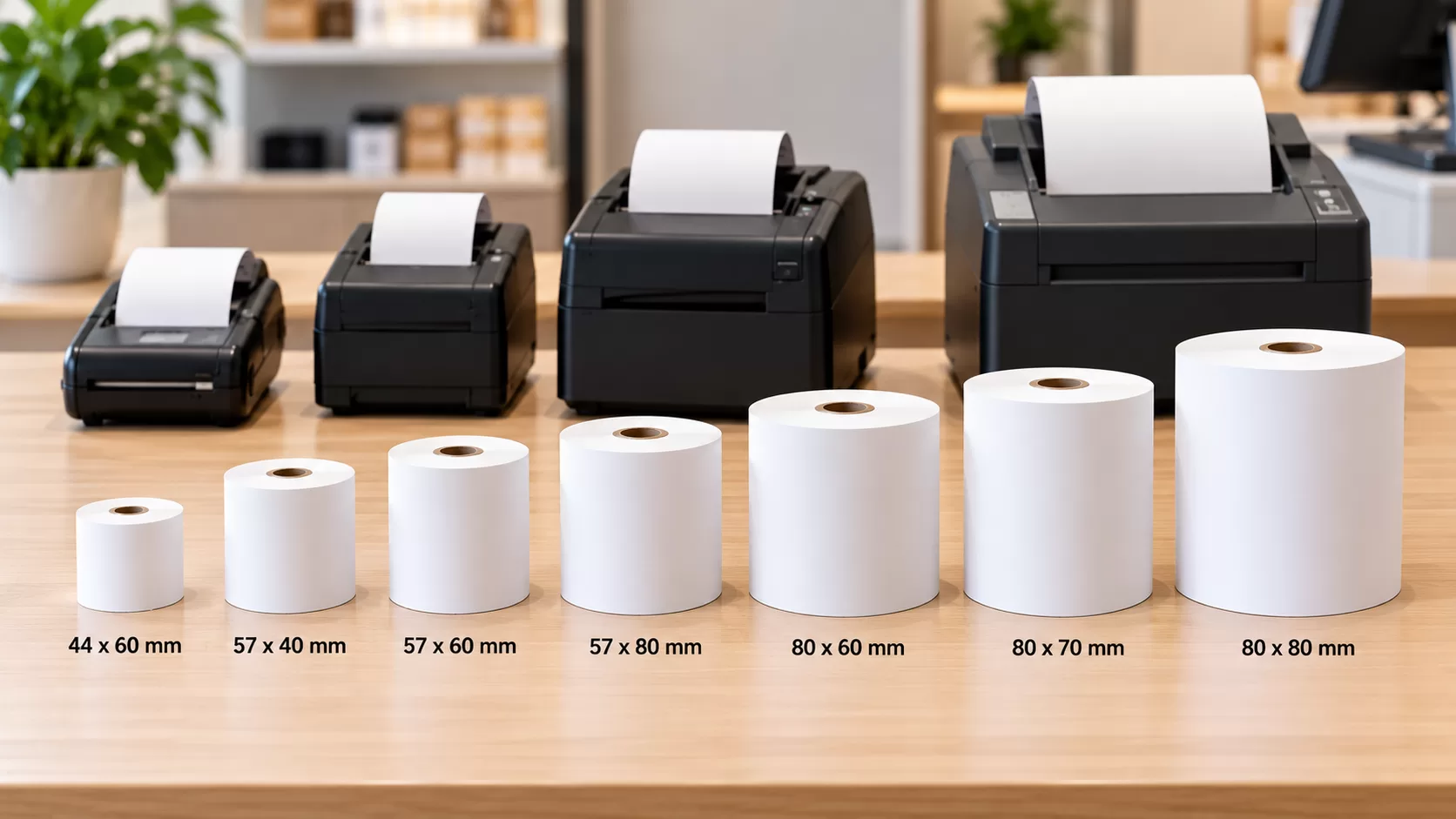
Two thermal paper rolls can look almost identical and still behave differently in the same printer.
The reason is simple: paper width is only one part of the specification. Buyers also need to check roll diameter, core dimensions, paper thickness or grammage, and the type of thermal paper required for the application.
For Malaysian retailers, restaurants, payment operators, banks, logistics companies and other businesses that use receipt printers regularly, choosing the wrong roll can cause more than an inconvenient return. A roll may be too wide for the paper path, too large for the printer compartment, or unsuitable for the required printing and handling conditions.
The safest way to select a thermal paper roll is therefore to begin with the printer specification, then match the roll dimensions and paper requirements to it.
For example, Epson’s TM-m30II supports approximately 57.5mm and 79.5mm paper widths, with a maximum roll diameter of 83mm. This shows why simply asking for an “80mm thermal roll” does not provide the complete specification.
SMI Paper Industry supplies plain thermal paper rolls in common widths including 57mm and 80mm, together with different diameters, grammages and core configurations. Custom dimensions are also available for applications that fall outside standard requirements.
Quick Guide to Common Thermal Paper Roll Sizes
Different printer categories tend to use certain widths more often than others, but the exact printer model remains the final reference.
| Application / Printer Type | Common Width | What to Check Before Ordering |
|---|---|---|
| Desktop POS / Receipt Printer | 80mm is common; some models support 58mm | Paper width, maximum roll diameter, core specification and paper thickness |
| Compact POS Printer | 57mm / 58mm | Exact printer width and maximum outside diameter |
| Mobile Receipt Printer | 58mm or 80mm, depending on model | Printer model, roll width and compact roll diameter |
| Payment / Card Terminal | 57mm / 58mm is common | Device-specific dimensions and available paper compartment space |
| Cash Register | 57mm or 80mm | Machine specification, roll diameter and core |
| ATM / Kiosk | Varies by equipment | Width, maximum roll capacity, core and mechanism specification |
These figures work best as a starting point rather than a universal rule. Printer manufacturers set their own media specifications. Some models even support more than one width.
How to Read Thermal Paper Roll Dimensions
Thermal paper roll specifications usually describe several physical measurements rather than one overall “size”.
A notation such as:
80mm × 60mm × 12mm
may refer to three different dimensions associated with the roll.
In many product listings, the first figure describes paper width, while another figure describes the outside roll diameter and a third may relate to the core. However, suppliers do not always present measurements in exactly the same sequence.
For that reason, buyers should confirm what each number means rather than relying on notation alone.
1. Paper Width
Width refers to the measurement across the paper from one side to the other.
Two of the most familiar receipt-paper widths are:
- 57mm / 58mm
- 80mm
SMI’s plain thermal paper range includes 57mm, 80mm, 2-1/4 inch and 3-1/8 inch options, with additional dimensions available upon request.
2. Roll Diameter
The outside diameter determines how physically large the roll becomes.
This measurement matters because the printer compartment has a maximum capacity.
An 80mm-wide roll with a 60mm diameter and another 80mm-wide roll with an 80mm diameter have the same paper width, but they do not occupy the same amount of space inside the printer.
3. Core Size
The core sits at the centre of a conventional roll.
SMI lists 13mm/21mm inner/outer core configurations for its plain thermal paper rolls and can also supply coreless options and other configurations.
Core specifications vary by printer design, so the printer manual remains the most reliable reference.
57mm vs 80mm Thermal Paper Rolls
The main difference between 57mm and 80mm thermal paper is the printable width available to the printer.
57mm or 58mm rolls suit many compact devices, payment terminals and smaller receipt printers. Their narrower format helps equipment manufacturers keep the printer footprint small.
80mm rolls provide more printable width and commonly appear in desktop POS systems used by restaurants, retailers and other businesses that print longer or more detailed receipts.
Neither size is inherently better.
The correct choice depends on the printer.
Epson’s TM-m30II is a useful example because one model can support both approximately 58mm and 80mm paper configurations. Epson specifies 57.5 ± 0.5mm and 79.5 ± 0.5mm widths, with an 83mm maximum roll diameter.
This illustrates an important purchasing point: the commercial name “57mm” or “80mm” is a convenient category, while the printer specification gives the actual permitted measurement.
Major QSR chains and café groups have been early adopters of coreless rolls for operational and sustainability reasons.
Why Two 80mm Thermal Paper Rolls May Not Fit the Same Printer
The label “80mm thermal paper” describes the width, not the entire roll.
A buyer may encounter:
- 80mm × 60mm
- 80mm × 70mm
- 80mm × 75mm
- 80mm × 80mm
The width remains similar, yet the outside diameter changes.
A larger diameter generally means a larger roll, which can hold more paper depending on thickness and core configuration. The trade-off is physical space: a compact printer may not have enough room for the larger roll.
This distinction explains why printer documentation often specifies both paper width and maximum roll diameter. Epson’s TM-m30II, for instance, accepts rolls up to 83mm in diameter.
Before reordering, compare both measurements with the existing roll or printer manual.
Does the Core Matter?
Yes, particularly when the printer mechanism depends on a particular core configuration.
A conventional thermal paper roll wraps the paper around a central core. The core can vary in inner and outer diameter, material and construction.
SMI’s plain thermal paper rolls include standard core configurations as well as coreless options.
Coreless rolls remove the central tube entirely. They can reduce material usage and allow more paper within a comparable roll footprint in suitable applications.
However, coreless paper is not automatically compatible with every printer mechanism. Businesses considering this format should check their equipment specification or discuss the application with the supplier first.
SMI has also published information on coreless thermal paper rolls, which can help buyers understand where this format differs from conventional cored rolls.
Does GSM Change the Thermal Paper Roll Size?
GSM does not define the roll width, but it still matters when specifying thermal paper.
GSM means grams per square metre and describes paper weight. SMI lists thermal paper options including 48gsm, 55gsm, 60gsm, 65gsm and 70gsm, among others.
Paper weight and thickness can influence how much paper fits into a roll of a given outside diameter.
That means two rolls with the same width and outside diameter do not necessarily contain exactly the same paper length if their paper specifications differ.
Printer manufacturers may also state acceptable paper thickness rather than GSM. Epson, for example, specifies a thermal paper thickness range for the TM-m30II of approximately 48 to 80 μm.
This is another reason buyers should treat width alone as incomplete information.
Choosing the Paper Specification After Confirming the Size
Once the physical dimensions fit the printer, the next decision concerns the paper itself.
SMI offers several thermal-paper configurations. These categories describe the paper requirement or finished product; they are not separate physical size standards.
1. Plain Thermal Paper
Plain thermal paper rolls suit applications where businesses need standard unprinted receipt or transaction paper.
SMI lists 57mm, 80mm and additional widths, diameters from 40mm to 200mm, several grammages and different core configurations.
2. Pre-Printed Thermal Paper
Businesses can use pre-printed thermal paper rolls when receipts need logos, promotional messages, terms, branding or other information printed in advance.
SMI publishes a similarly broad specification range for this product, including 57mm and 80mm widths, 40–200mm diameters, several grammages and core or coreless configurations.
The printer still determines whether the roll dimensions fit.
Pre-printing introduces another technical consideration as well. Epson notes that pre-printing on a thermal recording surface can affect print quality if the paper and ink are unsuitable, and recommends following the paper manufacturer’s conditions.
3. BPA-Free, BPA/BPS-Free and Phenol-Free Options
Chemical composition forms another layer of specification.
SMI offers BPA-free, BPA/BPS-free and phenol-free thermal paper options within its product portfolio.
These descriptions should not be confused with roll dimensions. A buyer may still need to specify, for example, an 80mm roll of a particular diameter and core configuration while choosing a BPA/BPS-free or phenol-free paper option.
In other words:
Size determines whether the roll physically fits.
Paper specification determines whether it suits the intended requirement.
SMI Thermal Paper Specifications at a Glance
This table summarises specifications that SMI currently publishes for its plain and pre-printed thermal paper products. Exact availability should still be confirmed when ordering.
| Specification | SMI Published Options | Why It Matters |
|---|---|---|
| Width | 80mm, 57mm, 3-1/8", 2-1/4", other sizes on request | Must match the printer's supported paper width |
| Roll Diameter | 40mm to 200mm | The roll must fit within the printer compartment |
| Grammage | 48gsm, 55gsm, 60gsm, 65gsm, 70gsm and others | Affects paper specification and the amount of paper that fits within a given roll configuration |
| Core | 13mm/21mm inner/outer, coreless and other configurations | Needs to suit the printer mechanism and roll configuration |
| Paper / Finish Options | Plain, pre-printed, BPA-free, BPS-free and phenol-free options | Chosen according to application, branding and paper requirements |
SMI’s public product specifications support these ranges for its plain and pre-printed thermal paper lines.
How to Measure Your Existing Thermal Paper Roll
If the printer manual is unavailable, the existing paper roll can provide useful clues.
1. Measure the Width
Remove the roll and measure straight across the paper from edge to edge.
Do not measure around the circumference.
A reading close to 57 or 58mm usually indicates the narrower commercial size, while a reading close to 80mm points to the wider format.
2. Measure the Outside Diameter
Measure across the complete circular roll through its centre.
This measurement helps determine whether a replacement roll will physically fit inside the printer compartment.
3. Check the Core
Measure or identify the centre core.
If the current paper uses a coreless configuration, do not assume that a standard cored roll will behave identically in the same mechanism.
4. Check the Printer Model
Look for the model number on the printer casing or label, then refer to the manufacturer’s manual or technical specification.
This remains more reliable than selecting paper based only on the application type.
5. Identify the Existing Paper Requirement
Note whether the current roll is plain, pre-printed or supplied to a particular chemical specification such as BPA-free or phenol-free.
6. Keep a Sample
For repeat commercial orders, keeping one correctly fitting roll as a reference can make future specification checks much easier.
If measurements remain uncertain, send the printer model, existing roll details or sample information to the supplier before placing a large order.
Common Thermal Paper Ordering Mistakes
The most common mistakes usually come from treating one measurement as the complete specification.
1. Ordering by Width Alone
“80mm thermal paper” still leaves the roll diameter, core and paper specification unresolved.
2. Assuming All POS Printers Use 80mm Paper
Many do, but others use 57/58mm paper, and some printers support both. Epson’s TM-m30II is one example of a printer family that supports both widths.
3. Ignoring Maximum Roll Diameter
A roll may have the correct width yet remain too large for the compartment.
4. Confusing GSM with Physical Roll Dimensions
GSM describes paper weight, not roll width or outside diameter.
5. Choosing Paper Chemistry Before Checking Compatibility
BPA-free or phenol-free describes the paper formulation. It does not replace width, diameter and core specifications.
These distinctions are especially important for businesses ordering cartons or recurring bulk quantities, where a small specification error can affect a large number of rolls.
Standard Size or Custom Thermal Paper Roll?
Standard rolls make sense when an existing commercial specification fits the equipment and purchasing requirement.
A custom configuration becomes relevant when the printer or application requires a different width, outside diameter, core, grammage, printing format or packaging arrangement.
SMI states that dimensions outside its listed standard widths are available upon request for its thermal paper products. Its published plain thermal paper range covers roll diameters from 40mm to 200mm, which allows substantially different configurations for POS, cash-register and other applications.
For businesses placing recurring or export orders, it is useful to confirm the complete specification once and keep it consistent across subsequent purchases.
What Information Should You Send a Thermal Paper Roll Supplier?
A clear enquiry reduces the need for repeated specification checks and helps the supplier understand exactly what is required.
| Information | Example |
|---|---|
| Printer Model | Exact POS, receipt, kiosk or payment-terminal model |
| Paper Width | 57mm / 58mm / 80mm or another specified width |
| Maximum Roll Diameter | According to printer specification or existing roll |
| Core | Required core dimensions or coreless configuration |
| Paper Specification | Plain, pre-printed, BPA-free, BPA/BPS-free or phenol-free |
| Grammage | If specified by the existing application |
| Quantity | Number of rolls, cartons or recurring requirement |
| Printing Requirement | Plain or custom pre-printed design |
| Delivery Destination | Local or export delivery location |
If only some of these details are available, the printer model and an existing paper sample provide a sensible starting point.
Need Help Matching a Thermal Paper Roll to Your Printer?
If you already know your printer model or existing roll dimensions, SMI Paper Industry can help you identify a suitable thermal paper specification.
Prepare the printer model, roll width, outside diameter, core details, paper requirement and expected quantity where possible. For custom applications, SMI can also discuss alternative dimensions, grammages, core configurations and pre-printing requirements.
Contact SMI Paper Industry to discuss your thermal paper roll requirements.
Choosing the Right Thermal Paper Roll in Malaysia
The correct thermal paper roll is not determined by width alone.
A reliable specification brings together:
printer model + paper width + maximum roll diameter + core configuration + paper specification + grammage where relevant.
For many POS and receipt applications, 57/58mm and 80mm remain familiar starting points. The actual printer specification, however, determines what fits.
Once physical compatibility is confirmed, buyers can then select between plain or pre-printed thermal paper, different chemical formulations, core or coreless configurations, and standard or custom dimensions.
SMI Paper Industry supplies thermal paper rolls in a range of widths, diameters, grammages and configurations for commercial and industrial requirements. Businesses that need a non-standard configuration can discuss the required printer and paper specifications directly with the supplier.
Frequently Asked Questions (FAQs)
What are the most common thermal paper roll sizes in Malaysia?
57/58mm and 80mm are among the most common thermal paper widths for receipt and POS applications. The complete roll specification also includes outside diameter, core and paper requirements, so the printer manual should be checked before ordering.
Can SMI manufacture custom thermal paper roll sizes?
SMI lists custom dimensions upon request for its thermal paper products, alongside common 57mm and 80mm widths, 40–200mm roll diameters, several grammages and different core configurations.
Is 80mm × 80mm the same as 80mm × 60mm thermal paper?
No. Both may have approximately the same paper width, but the roll diameter differs. A printer that accepts an 80mm-wide roll may still have a maximum diameter that prevents a larger roll from fitting.
How do I know what thermal paper roll fits my POS printer?
Check the printer manufacturer’s media specification for paper width, maximum roll diameter, core requirements and acceptable paper thickness. If the manual is unavailable, measure the existing roll and identify the exact printer model.
Is 57mm thermal paper the same as 58mm thermal paper?
These terms are often used commercially for the same general width category, but printer manufacturers provide more exact tolerances. For example, Epson specifies approximately 57.5 ± 0.5mm for one of the supported widths on its TM-m30II.
Does thicker thermal paper reduce the amount of paper on the roll?
For a fixed roll diameter, paper thickness can affect the length of material that fits onto the roll. This is why width and outside diameter alone do not always describe the complete paper capacity.
Disclaimer
The information in this article is for general informational purposes only. For advice tailored to your business or printing needs, please consult a qualified professional or contact our team. While we aim for accuracy, we cannot guarantee the content is error-free, and SMI Paper Industry is not responsible for any errors or omissions.