

Coreless vs Cored Thermal Paper Rolls: Which One Is Right for Your Business?
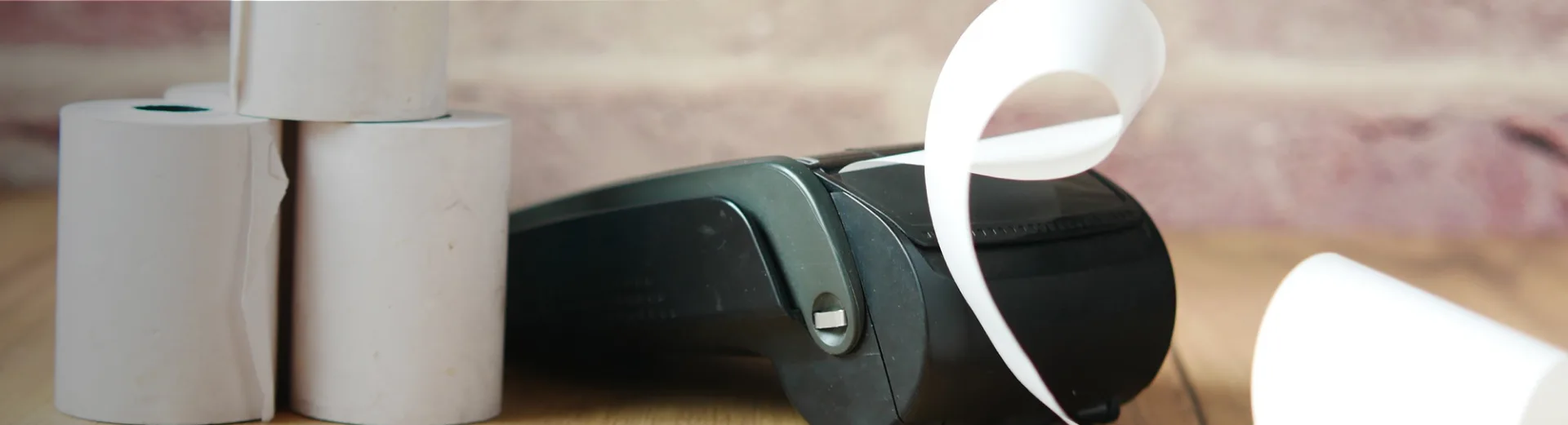
If you have ever changed a receipt roll during a busy lunch rush, you know the frustration. The old core drops out, rolls across the floor, and you are left looking for a bin while a queue builds at the counter.
That small hollow tube inside a standard thermal paper roll is easy to ignore. But for businesses printing hundreds or thousands of receipts daily, it quietly adds cost, waste, and downtime.
Quick answer:
Coreless thermal paper rolls provide more paper per roll, reduce waste, and lower long-term costs. Cored rolls remain suitable for older printers that require a spindle.
This guide explains the differences between coreless and cored thermal paper rolls. It covers paper length, cost, storage, printer compatibility, and environmental impact, enabling you to make an informed decision for your business.
What Is a Cored Thermal Paper Roll?
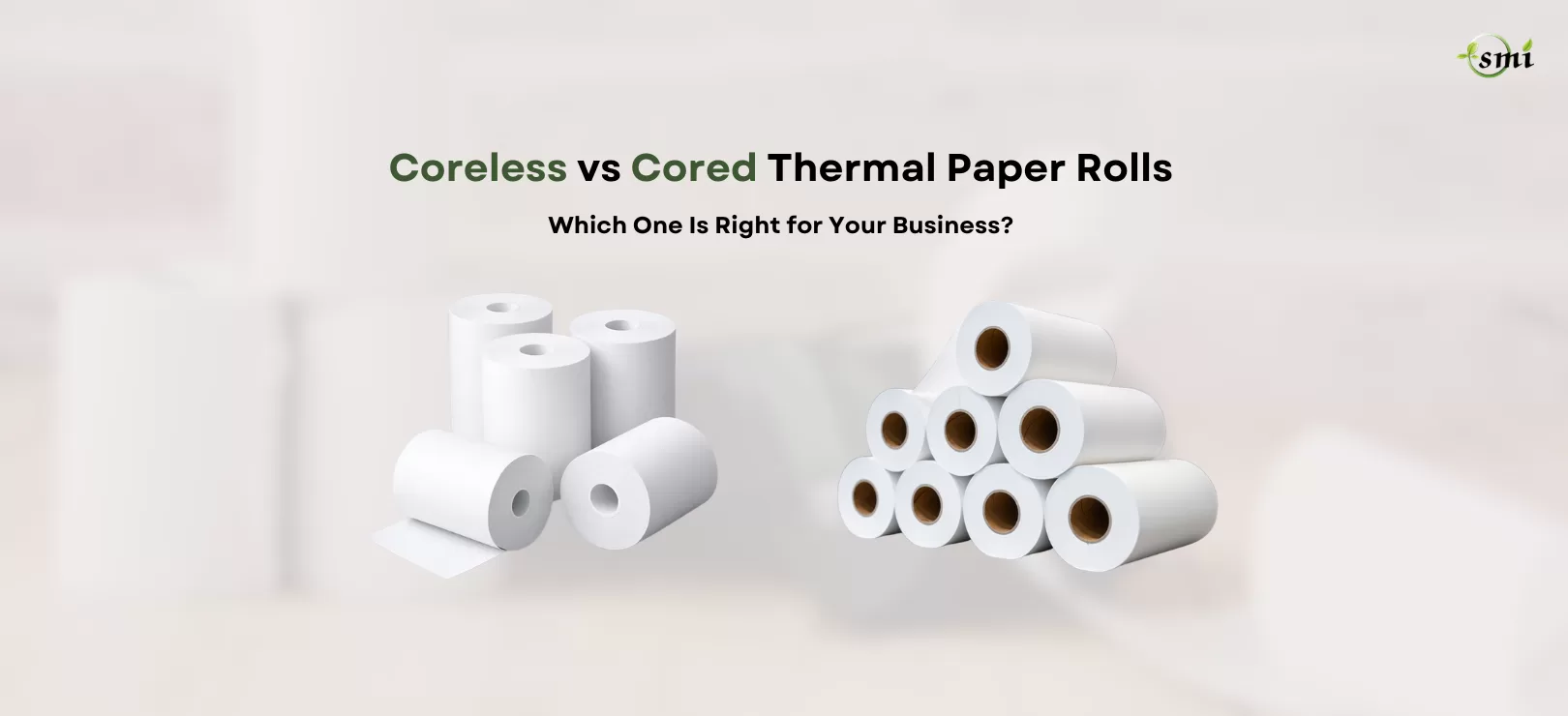
Cored thermal paper rolls are the traditional format used in cash registers, POS systems, and ATMs. The paper is wound around a hollow tube, typically made of cardboard or plastic, which provides support during manufacturing and loading.
Standard core specifications:
- Core inside diameter (ID): 12.7 mm (1/2 inch)
- Core outside diameter (OD): 17–19 mm
- Core material: Cardboard or rigid plastic
Advantages of cored rolls:
- Compatible with most legacy POS printers
- Widely available from suppliers
Limitations of cored rolls:
- Generates disposable core waste
- Requires extra time to remove old cores during roll changes
- Produces dust that can reduce the lifespan of thermal printheads
Cored rolls remain suitable for many businesses, particularly those using older POS or ATM equipment. However, modern printing systems and operational efficiency requirements have highlighted the benefits of coreless alternatives.
What Is a Coreless Thermal Paper Roll?
Coreless thermal paper rolls are designed without a central cardboard or plastic core. The paper is tightly wound, forming a small natural hole at the center, typically 8–10 mm in diameter.
Key advantages of coreless rolls:
- Greater usable paper per roll
- Lighter and more compact, saving storage and shipping space
- Faster roll replacement, reducing downtime
- Less dust accumulation, extending printer life
- Environmentally friendly, eliminating core waste
Modern thermal printers, POS terminals, mobile printers, and self-service kiosks are compatible with coreless rolls.
At SMI Paper Industry, we manufacture coreless thermal paper rolls in standard widths of 57 mm and 80 mm, with custom sizes available for bulk orders and OEM clients.
Cored vs Coreless Thermal Paper Rolls: The Key Differences at a Glance
| Feature | Cored Thermal Roll | Coreless Thermal Roll |
|---|---|---|
| Centre hole diameter | 12.7 mm | 8–10 mm |
| Paper length (same outer diameter) | Shorter due to core | Longer, more usable paper |
| Roll diameter (same paper length) | Larger | Smaller |
| Cost per roll | Higher, including core | Lower, paper only |
| Roll change speed | Slower, requires removing old core | Faster, drop-in replacement |
| Printhead dust accumulation | Higher | Lower |
| Storage space required | More | Less |
| Shipping efficiency | Standard | Higher, more rolls per carton |
| Environmental impact | Core ends in landfill | Zero core waste |
| Printer compatibility | Most legacy and modern printers | Modern POS, mobile, and kiosk printers |
When Cored Rolls Are Still Useful
While coreless rolls offer many advantages, they may not be suitable for all businesses. Cored thermal paper rolls remain the better option when:
- Printer Compatibility: Some older thermal printer models, especially certain ATMs and legacy cash registers, require a central spindle to hold the roll in place. These printers cannot accept coreless rolls without modification. Always check your printer’s specifications before switching.
- Legacy Infrastructure: Businesses using older POS hardware, which was designed for cored rolls, may find the cost and disruption of upgrading equipment outweighs the benefits of switching paper types.
- Supply Availability: Although coreless rolls are more widely available, in certain regions with less developed distribution networks, cored rolls remain the dominant format and may offer more reliable supply.
6 Practical Advantages of Coreless Thermal Paper Rolls
1. More Paper Per Roll
The most immediate benefit of coreless thermal paper rolls is that they contain more usable paper than their cored counterparts. In a cored roll, a portion of the roll’s diameter is taken up by the tube, which is discarded after use. By removing the core, manufacturers can wind more paper into the same space.
For example, if you use a traditional 80 mm cored roll, it typically holds around 80 meters of paper. However, a coreless roll of the same outer diameter can hold considerably more paper. This is because the 12.7 mm core space is now filled with usable paper instead. Alternatively, if you prefer to keep the same paper length, the coreless roll will have a smaller outer diameter (around 77 mm), saving valuable storage and shipping space.
This simple design change allows you to maximise your paper usage and avoid paying for material (the core) that you’ll just throw away.
2. Faster Roll Changes, Reduced Downtime
For high-traffic businesses such as retail stores, petrol stations, and quick-service restaurants, every second counts. When you use a cored roll, replacing a spent roll requires removing the old core from the spindle. This extra step, while seemingly quick, adds up over time, especially when you’re replacing dozens of rolls each day across multiple terminals.
Coreless rolls simplify this process. With no core to remove, the operator can simply drop a new roll into place. This faster roll change means reduced downtime, allowing your business to run more smoothly, particularly during peak hours when queues are at their longest.
When you’re operating at high volumes, reducing roll-change time can have a meaningful impact on efficiency, ensuring that your checkout lines stay moving and your staff are not delayed by unnecessary tasks.
3. Less Dust, Longer Printer Life
A common issue with cored thermal paper rolls is the fine dust generated as the paper unwinds from the cardboard core. This dust accumulates on the thermal printhead, leading to faded, streaky, or illegible prints, and may require frequent maintenance or even early printhead replacement.
Coreless rolls eliminate this problem by removing the cardboard core. With less dust and debris entering the printer, the printhead stays cleaner, extending its lifespan and reducing maintenance needs.
A well-maintained printhead can last up to 20 years, ensuring consistently clear prints and minimizing long-term printer costs, which is especially important for businesses that rely on accurate documentation for audits or warranty records.
4. Lower Storage and Shipping Costs
Coreless thermal paper rolls are more space-efficient than cored rolls. With a smaller outer diameter for the same paper length, they take up less space, allowing more rolls to fit into a carton, more cartons onto a pallet, and more pallets in a shipping container.
For businesses importing large quantities, this compact design translates into lower shipping costs per roll. Additionally, coreless rolls require less storage space, helping businesses maximise warehouse efficiency and reduce logistical costs.
In short, coreless rolls offer a more cost-effective solution for bulk buyers by reducing shipping and storage needs.
5. No Core Waste, Better for the Environment
Cored thermal paper rolls generate waste in the form of the cardboard or plastic core, which is often too small and dirty to recycle, ending up in landfills.
Coreless rolls eliminate this waste entirely. Without a core to dispose of, businesses can reduce their environmental footprint. This is especially important for companies with sustainability goals or those looking to improve their ESG performance.
For businesses printing high volumes of receipts, switching to coreless rolls can significantly reduce waste and help contribute to a cleaner, greener planet.
6. Cost Savings at the Production Level
Manufacturing cored rolls involves sourcing and incorporating core materials, such as cardboard or plastic, into every roll. Coreless rolls, on the other hand, eliminate the need for these materials, directly lowering production costs.
For businesses buying in bulk, these savings add up. While the price difference can vary based on factors like paper grade, roll size, and order volume, coreless rolls consistently offer a lower cost per roll compared to cored alternatives — because you’re paying for paper, not packaging.
Printer Compatibility: What to Check Before You Switch
Before placing an order for coreless thermal paper rolls, confirm the following with your printer’s specifications or your supplier:
1. Does your printer use a spindle?
If your printer uses a spindle that passes through the core, it will be incompatible with coreless rolls. If the spindle is removable, check whether the printer can operate without it.
2. What is the recommended roll width?
Coreless thermal paper rolls are available in the same standard widths as cored rolls — typically 57 mm and 80 mm. Verify the required roll width for your printer.
3. What is the maximum outer roll diameter your printer accepts?
This determines the maximum length of paper you can use per roll. Consult your supplier to ensure the roll size fits your printer’s capacity.
4. What is the centre hole diameter?
If you’re unsure about any of these factors, it’s always a good idea to request a sample roll from your supplier and test it in your printer before placing a full order.
Feel free to contact us — we can assist you in selecting the right roll for your printer.
Who Should Switch to Coreless Rolls?
Coreless thermal paper rolls are ideal for businesses operating modern POS systems, kiosks, or mobile devices. Common examples include:
- Retail chains and supermarkets with high transaction volumes
- Restaurants, cafés, and quick-service operations
- Petrol stations and self-service kiosks
- Bulk importers and distributors seeking efficient storage and shipping
- Businesses committed to reducing environmental impact
A Note on Paper Quality: The Factor That Outlasts the Format Decision
Whether you choose coreless or cored thermal paper rolls, paper quality plays a crucial role in print clarity, receipt longevity, and overall printer performance. Here are the key quality indicators to consider:
- Paper Grade and GSM:
Higher GSM papers are thicker, more durable, and produce cleaner prints. For POS applications, common GSM grades range from 55 GSM to 65 GSM. - Coating Quality:
The heat-sensitive coating affects how the paper responds to the thermal head. A high-quality coating ensures sharp, consistent prints. - Chemical Composition:
BPA-free and phenol-free thermal paper is increasingly preferred, especially for businesses prioritizing health and safety. It’s also required in certain export markets. SMI Paper Industry offers both BPA-free and phenol-free thermal paper rolls, in addition to standard grades. - Print Longevity:
Standard direct thermal printing typically lasts 7 to 15 years under proper storage conditions. Premium paper can last up to 20 to 25 years, making it ideal for businesses that need long-lasting receipts for records, warranties, or audits. - Certification:
For businesses sourcing paper internationally, working with a certified supplier (ISO 9001:2015, SMETA, or Sedex) ensures consistent quality and ethical manufacturing practices.
Summary: Which Should You Choose?
Ask yourself three questions:
- Is your printer compatible with coreless rolls?
- Are you ordering in bulk?
- Are sustainability goals important to your business?
For most modern businesses, coreless thermal paper rolls provide more paper per roll, lower cost per receipt, faster roll changes, and reduced environmental impact. Cored rolls remain suitable for legacy systems or where supply reliability is a concern.
Frequently Asked Questions (FAQs)
Are coreless thermal paper rolls better?
Yes, for most modern businesses, they provide better cost efficiency, less waste, and longer roll usage.
Can I use coreless thermal paper rolls in any POS machine?
No. If your printer requires a central spindle, it may not work with coreless rolls unless the spindle is removable and the printer supports spindle-free operation.
Do coreless thermal paper rolls really save money?
Yes. While the price per roll may be similar, coreless rolls contain more usable paper, reducing the frequency of replacements and lowering overall cost per receipt.
Can thermal paper rolls be recycled?
Thermal paper is generally not recyclable through standard paper recycling due to its chemical coating. However, using coreless rolls reduces additional waste from cores.
Do coreless thermal paper rolls affect print quality?
No. Print quality depends on the paper coating and grade, not whether the roll has a core.
Ready to Switch to Coreless Thermal Paper Rolls?
SMI Paper Industry has been a trusted thermal paper rolls manufacturer since 2012. We offer high-quality coreless thermal paper rolls in standard and custom sizes, available in bulk for businesses, distributors, and wholesalers worldwide.
Our products are ISO 9001:2015, SMETA, and Sedex certified, ensuring consistent quality and ethical manufacturing practices.
Explore our coreless thermal paper rolls
WhatsApp us directly: +60194580433
Disclaimer
The information in this article is for general informational purposes only. For advice tailored to your business or printing needs, please consult a qualified professional or contact our team. While we aim for accuracy, we cannot guarantee the content is error-free, and SMI Paper Industry is not responsible for any errors or omissions.