

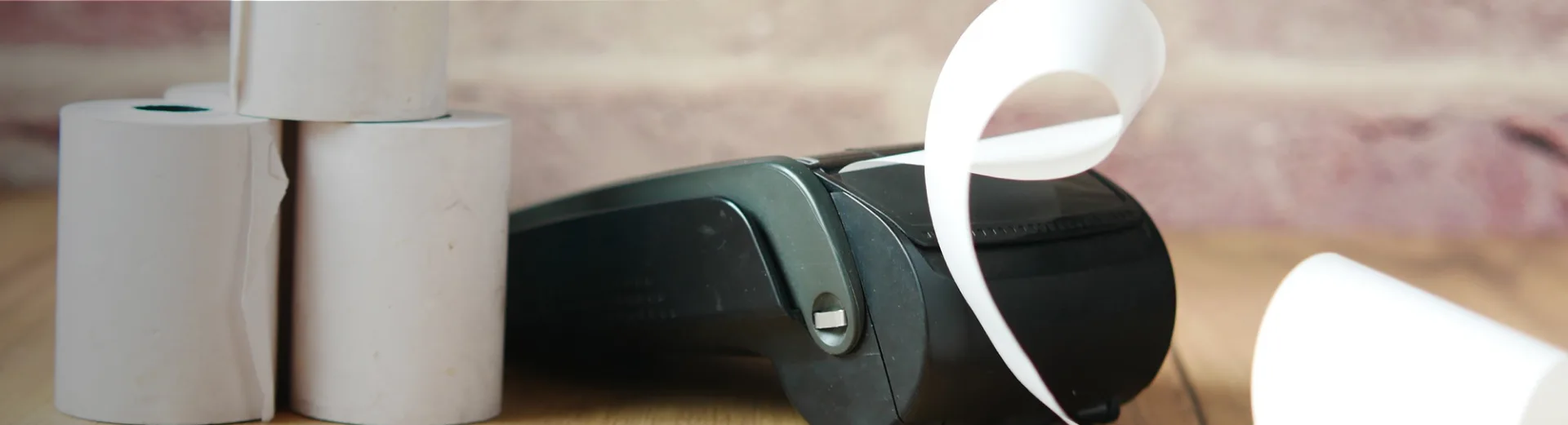
5 Industries Switching to Coreless Thermal Paper Rolls (And Why)
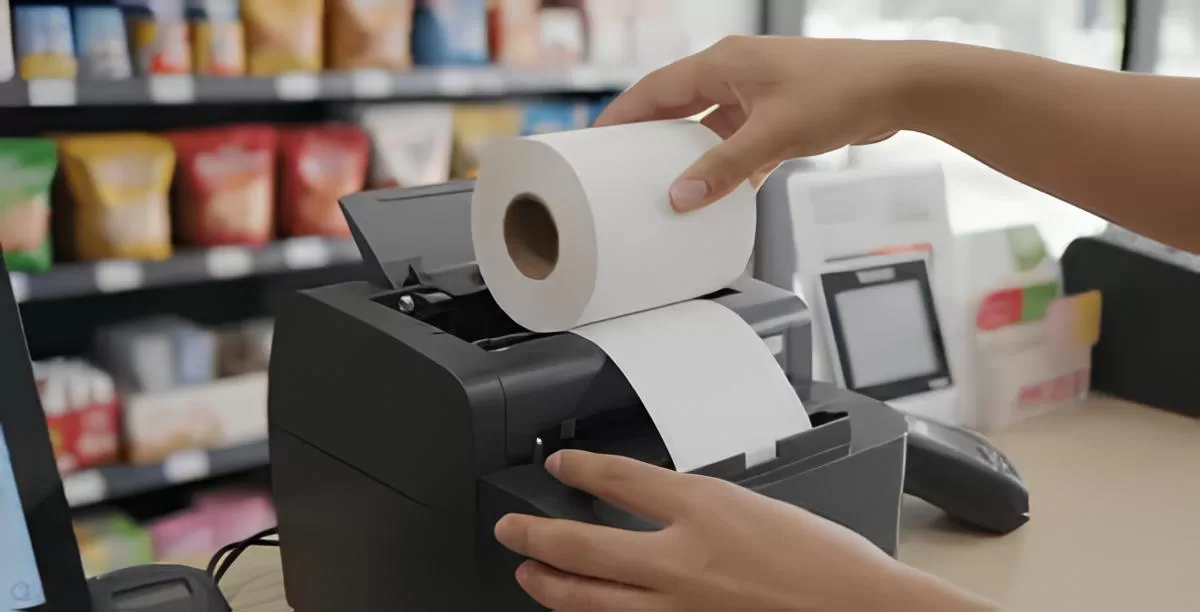
Thermal paper rolls have been a staple of commerce for decades. From cash registers and payment terminals to self-service kiosks and fuel pumps, almost every transaction-based environment relies on them.
For most of that time, every roll included a hollow core at its center, usually made of cardboard or plastic. It was simply part of the product, taken for granted, discarded, and replaced thousands of times each year.
This is starting to change. Across five major industries, businesses are transitioning from cored to coreless thermal paper rolls. The reasons are consistent: reduced waste, lower costs, faster operations, and smarter use of space within every roll.
This guide explores the industries leading this shift, the drivers behind it, and the benefits businesses gain by making the switch.
What Makes Coreless Thermal Paper Different
A coreless thermal paper roll is tightly wound without a cardboard or plastic tube in the center. The innermost layer is secured to maintain the roll’s shape, leaving a small natural hole, typically 8–10 mm in diameter, compared to the standard 12.7 mm plastic core.
Modern thermal printers feed paper from the outside rather than threading a spindle through the center. This makes the core unnecessary and allows coreless rolls to offer several operational advantages:
- More usable paper in the same outer diameter because the space once occupied by the core is now filled with paper.
- Faster roll changes because there is no need to remove a spent core before loading a new roll.
- Less dust accumulation on the printhead because there is no cardboard shedding inside the printer.
- Lower cost per roll since the material for the core is no longer required.
- More rolls per shipment as the smaller diameter rolls pack more efficiently.
The advantages vary depending on the environment. Here is how they play out across the five industries adopting coreless rolls.
1. Retail and Supermarkets
Retail accounts for the largest share of thermal paper consumption globally. In 2024, POS systems represented over 60% of total thermal paper revenue, with retail at the core, including grocery chains, supermarkets, department stores, pharmacies, and convenience stores. These businesses collectively process billions of receipts every year.
In the United States, retailers handle roughly 30 billion receipts each year. Even a small improvement in paper yield per roll scales into significant operational and financial benefits.
Key reasons for switching to coreless rolls in retail include:
- High transaction volume: Cashiers in busy stores often change rolls multiple times per shift. Coreless rolls remove the step of extracting a spent core, saving seconds per transaction and reducing downtime across dozens of terminals.
- Sustainability initiatives: Major chains aim to reduce waste. Millions of cores removed from circulation each year add up to measurable landfill reduction. Coreless rolls support sustainability goals without disrupting operations.
- Bulk supply efficiency: Smaller diameter rolls pack more densely for shipping, lowering freight costs and landed price per roll when sourcing in bulk.
2. Food and Beverage Restaurants, Cafés, and QSR Chains
In the food and beverage industry, receipt printing is fast-paced and continuous. Busy quick-service restaurants (QSR) often run multiple POS terminals simultaneously during peak hours, printing receipts and kitchen tickets with no room for delays.
Coreless rolls improve operations by:
- Speeding up roll replacement because there is no spent core to remove, saving time during busy service.
- Reducing interruptions because more paper per roll means fewer roll changes per shift.
- Improving kitchen operations as kitchen printers benefit from the same speed and capacity advantages.
- Supporting brand sustainability because switching to coreless, BPA-free, or phenol-free paper demonstrates a commitment to reducing environmental impact.
Major QSR chains and café groups have been early adopters of coreless rolls for operational and sustainability reasons.
3. Petrol Stations and Fuel Dispensers
Petrol stations operate in environments that combine high volume with compact spaces. Fuel dispenser printers are small, and changing a cored roll can be fiddly and time-consuming, especially in outdoor or confined pump areas.
Coreless rolls provide:
- Faster and easier roll changes because there is no core extraction required.
- More paper per roll, which is particularly valuable at pumps since fuel receipts tend to be longer.
- Reduced freight costs because denser shipping of coreless rolls benefits multi-site operators.
These advantages improve service speed and reduce operational friction for forecourt staff.
4. Self-Service Kiosks and Ticketing
Self-service kiosks, such as parking pay stations, cinema ticketing machines, transit kiosks, and airport check-in systems, often operate unattended for long periods.
Coreless rolls benefit these systems by:
- Extending runtime between servicing because more paper per roll means fewer interruptions.
- Simplifying reloads through easy drop-in replacement, reducing errors.
- Optimizing storage because smaller diameter rolls allow more spares to fit inside the kiosk.
Self-service kiosks represent one of the fastest-growing thermal paper markets, and coreless rolls perfectly meet the operational requirements of unattended systems.
5. Logistics and Mobile POS
Across retail, food and beverage, petrol stations, self-service kiosks, and logistics, the reasons for switching to coreless thermal paper rolls share a common theme. The core was always a constraint disguised as a component.
It took up space that could have held more paper. It required an extra step for removal, which consumed time. It created waste with no practical end-of-life use. It also added a small but real cost to every roll, a cost passed down the supply chain to businesses that did not want to pay for disposable tubes.
Modern thermal printers do not need a core. Switching to coreless rolls is not a radical technical change. It is simply the removal of something that was never necessary.
For businesses in these industries, the result is clear. Coreless rolls provide more paper per roll, faster roll changes, less waste, and slightly lower costs per receipt. All of this is achieved without affecting print quality, printer compatibility, or operational workflow.
What These Five Industries Have in Common
Ask yourself three questions:
- Is your printer compatible with coreless rolls?
- Are you ordering in bulk?
- Are sustainability goals important to your business?
For most modern businesses, coreless thermal paper rolls provide more paper per roll, lower cost per receipt, faster roll changes, and reduced environmental impact. Cored rolls remain suitable for legacy systems or where supply reliability is a concern.
Ready to Switch to Coreless Thermal Paper Rolls?
Businesses with modern POS terminals, mobile devices, or kiosk printers can adopt coreless rolls easily. The key requirement is confirming the printer supports the roll width and outer diameter.
At SMI Paper Industry, we offer coreless thermal paper rolls in standard widths of 57 mmand 80 mm. We supply bulk orders for businesses, distributors, and wholesalers, with custom sizes and grades available.
Since 2012, we have supplied thermal paper to retail, food service, banking, and logistics, with ISO 9001:2015, SMETA, and Sedex certifications supporting procurement and ESG compliance.
Explore our coreless thermal paper rolls
WhatsApp us directly: +60194580433
Frequently Asked Questions (FAQs)
What is a coreless thermal paper roll?
A coreless thermal paper roll is a roll without a cardboard or plastic tube in the center. The paper is tightly wound around itself, leaving a small natural hole in the middle, and can be used in modern thermal printers that feed paper from the outside.
Which industries use coreless thermal paper rolls?
Coreless rolls are popular in retail, food and beverage, petrol stations, self-service kiosks, and logistics. Any business with high-volume receipt or ticket printing can benefit.
Are coreless thermal paper rolls compatible with all thermal printers?
Most modern thermal printers support coreless rolls if the roll width and outer diameter match the printer specifications. Always check your printer’s manual before switching.
Are coreless thermal paper rolls more expensive?
Coreless rolls are often cheaper in the long run because they reduce waste, pack more efficiently, and provide more paper per roll, lowering the cost per printed receipt.
Are coreless thermal paper rolls eco-friendly?
Yes. They eliminate the cardboard or plastic core, reducing waste and supporting sustainability initiatives without changing printer performance.
What sizes do coreless thermal paper rolls come in?
Common sizes include 57 mm and 80 mm widths, with diameters varying depending on printer requirements. Custom sizes are also available from many suppliers.
Disclaimer
The information in this article is for general informational purposes only. For advice tailored to your business or printing needs, please consult a qualified professional or contact our team. While we aim for accuracy, we cannot guarantee the content is error-free, and SMI Paper Industry is not responsible for any errors or omissions.